


On this page
Charles E. Stanton at Picpus in 1917
Colonel Charles E. Stanton, a member of General John J. Pershing’s staff, spoke the words on July 4, 1917. Lafayette College’s archives identify him as the speaker of “Lafayette, we are here”.
Pershing’s name remains associated with the scene because he commanded the American Expeditionary Force and took part in the visit. Stanton delivered the address on the general’s behalf. The account preserved by Lafayette College reproduces the speech and records that Pershing had approved it.
The setting was Picpus
The tribute took place beside Lafayette’s grave in Picpus Cemetery in Paris. The location recalled the marquis’s service in the American Revolution. The phrase connected that memory with the arrival of American soldiers in France during World War I.
Picpus is not the Lafayette Escadrille Memorial at Marnes-la-Coquette. The shared name can lead to confusion, particularly when an image caption omits its date or location. Before linking a photograph with the words, establish what it depicts and which ceremony it records.
Why is the phrase associated with Pershing?
Commemorative accounts sometimes attribute the phrase to Pershing. Lafayette College’s documentation separates the general’s presence from his officer’s address. Its material on the occasion includes an account of the ceremony and the words attributed to Stanton.
A famous phrase can become attached to an event’s best-known figure. Here, the useful approach is to return to the speech, testimony and archives rather than rely on repeated captions. Identifying Stanton does not diminish Pershing’s role in the arrival of the American Expeditionary Force.
A different July 4, in 1928
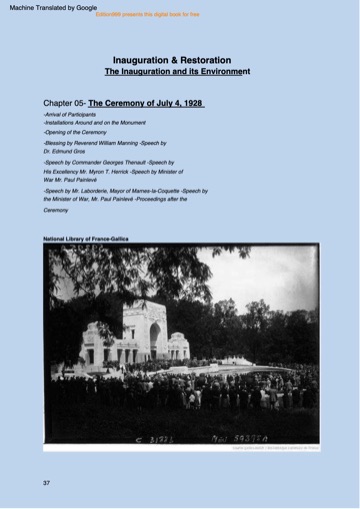
The Marnes-la-Coquette Memorial was dedicated on July 4, 1928, eleven years after the Picpus occasion. Jean-Claude Lemaire’s third book describes the preparations and program. French PDF page 15 records that the ceremony was originally planned for May 30 before being postponed.
The chapter on July 4, 1928 begins on PDF page 37. It covers addresses including those by Georges Thenault, Myron T. Herrick and Paul Painlevé. These documents concern the monument’s dedication, not Stanton’s address in 1917. The same calendar date marks two different moments in Franco-American remembrance.
How to cite the phrase and continue reading
A short citation should identify Charles E. Stanton, Picpus and July 4, 1917, together with its source. The French “Lafayette, nous voici” is a translation of the English phrase. Quotation marks should not imply that Stanton delivered those particular words in French.
In Jean-Claude Lemaire’s books, continue with the documents relating to the 1928 dedication. They show how ceremonies, speeches and invitations gave form to remembrance. The two histories connect, but their dates, locations and speakers should remain distinct.
Sources
- Lafayette College, Special Collections, Lafayette, We Are Here
- Lafayette College, documentation and Stanton’s address
- Lemaire and coauthors, Inauguration, ceremony chapter, PDF page 37
Prepared by the website’s editorial team with AI assistance, using the books and sources listed here. This new article is not authored by Jean-Claude Lemaire. Working review: October 29, 2026.
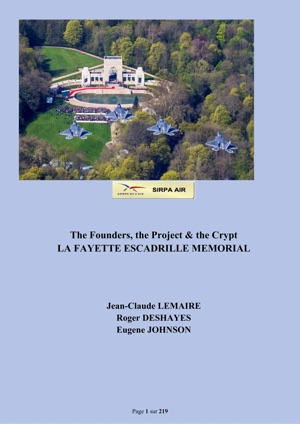 Volume 1
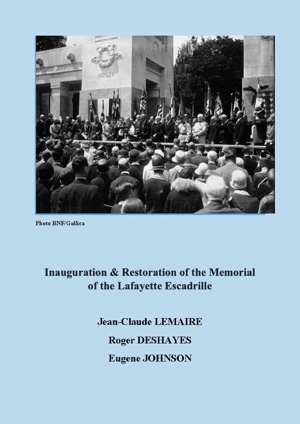 Volume 3