



On this page
Windows completed after the dedication
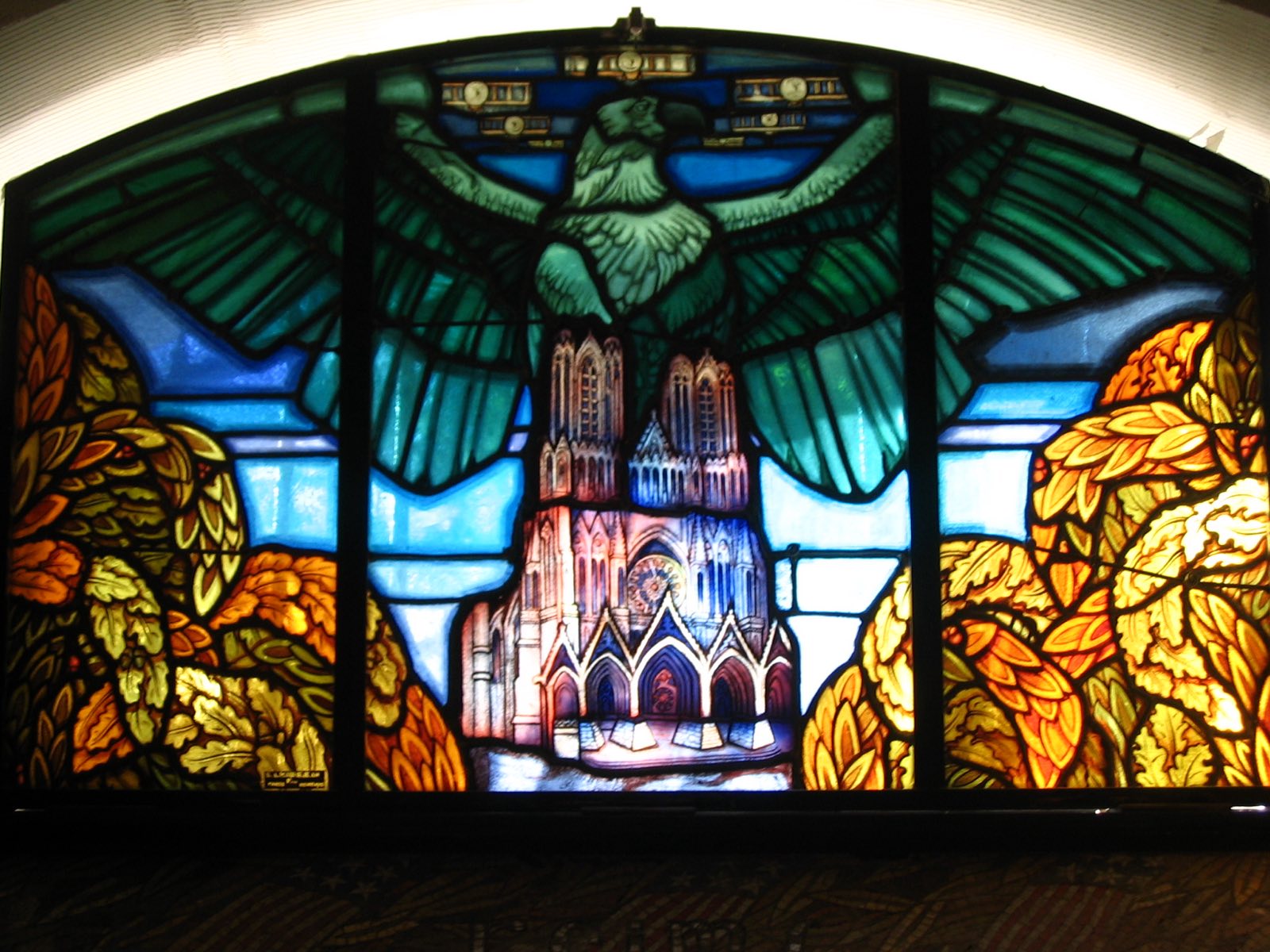
The Memorial was dedicated on July 4, 1928, before its stained glass was installed. In volume one, Jean-Claude Lemaire explains that plain glass initially filled the openings. He dates the completion and installation of the stained glass to 1930. The distinction helps when reading early photographs: the crypt’s appearance on dedication day does not necessarily show its final decoration.
Several proposals before the order
Chapter 29 traces discussions around the architect’s proposal, a Tiffany proposal from New York and a scheme presented under the names Damon and Barillet. Cost, lighting and the decoration’s coherence influenced the choices in Lemaire’s account. For Tiffany, the book records a $25,000 estimate excluding transport and installation, officially rejected on March 14, 1928. The estimate also excluded the ceramic decoration that was ultimately installed.
The decision in 1929
Lemaire records the decision to order thirteen windows from Mauméjean at the meeting on February 26, 1929. The proposal also included the mosaics beneath the windows. PDF page 188 follows revisions to the model through final approval in October. The chapter also describes a Spencer family donation toward the windows, with details on page 189.
Eleven battles and two symbolic compositions
The book distinguishes eleven battle windows from two allegorical compositions, Pro Libertate and Pax Gloria. A mosaic beneath each window bears an inscription or a battle name. These mosaics belong to the window decoration. Lemaire distinguishes them from the crypt’s mosaic floor, which he attributes to Gentil and Bourdet. The chapter 30 list on PDF page 191 provides a guide from each name to its illustration.
Sources
A reading of the cited documents. Interpretations are attributed to their author. Reviewed October 28, 2026.
 Volume 2
 Volume 3